
Spun Oil Washing: The Hidden Step That Defines Knit Fabric Quality
In knit fabric processing, the most critical steps are often the least visible. Before dyeing, finishing, or any value addition begins, there is a hidden but decisive stage that influences everything downstream—spun oil washing.
For fabrics made from polyester (PES), polyamide (PA), and other synthetic fibres, spin finishes and knitting oils are essential during yarn production. They improve lubrication, reduce friction, and ensure smooth knitting performance. However, once the fabric is formed, these same oils can become a challenge. If not removed effectively and uniformly, they can interfere with wetting behaviour, dye uptake, and overall fabric consistency.
Why spun oil removal matters more than you think
Residual oils rarely show their impact immediately. Instead, they manifest later as:
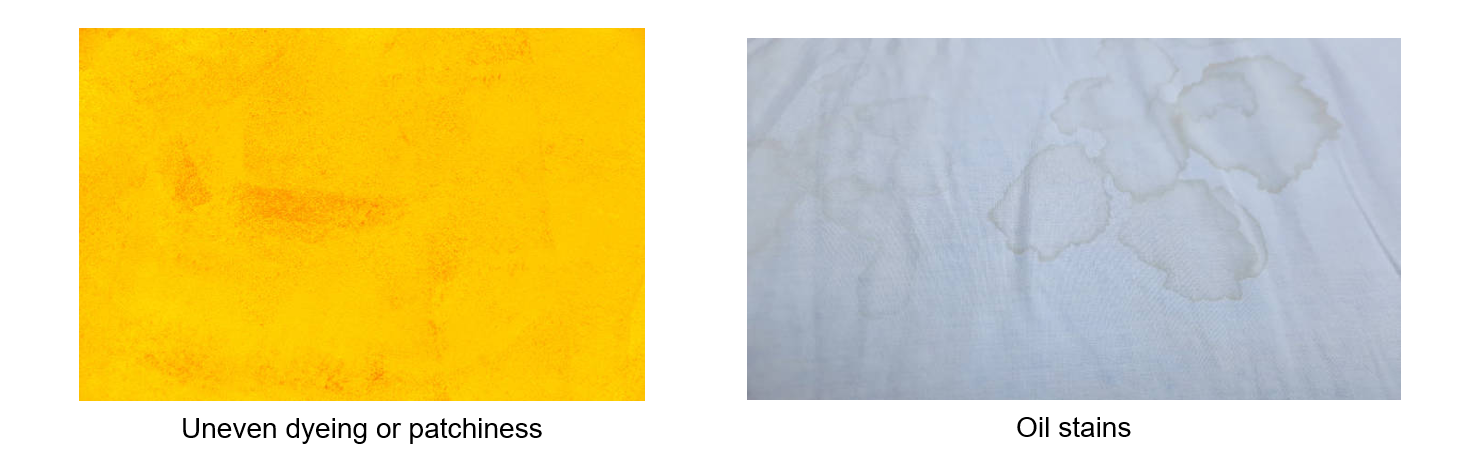
This makes spun oil washing less of a preparatory step and more of a process stabiliser.
The goal is not just to remove oils—but to do so uniformly, gently, and consistently, without disturbing the knit structure.
Spun oil washing: beyond conventional cleaning
During knitting, lubricants are essential for smooth yarn movement and machine efficiency; however, their uniform and complete removal post-knitting is equally critical for downstream processing. Unlike standard washing, spun oil removal requires a controlled and balanced process.
- Knit fabrics, by nature, are delicate and structurally flexible. Highly prone to deformation, edge curling, and dimensional instability when exposed to uneven tension or mechanical stress.
- At the same time, spun oils—often hydrophobic—must be effectively emulsified and removed across the entire fabric width without leaving residues or creating patchiness.
This creates dual and often competing requirements:
- High washing effectiveness to ensure complete and uniform oil removal
- Low mechanical stress to preserve fabric integrity and dimensional stability
Modern continuous washing systems are designed to address this balance with precision. Through optimised liquor circulation, they ensure consistent chemical action across the fabric. Controlled dwell time allows sufficient interaction between detergent chemistry and oil residues, while gentle fabric guidance mechanisms minimise tension and mechanical strain throughout the process.
The outcome extends beyond achieving surface cleanliness. A properly executed spun oil washing process results in a fabric that exhibits:
- Consistent absorbency
- Uniform dye uptake
- Predictable behaviour in all subsequent knit fabric processing stages such as dyeing, finishing, and compacting
In essence, it lays a stable foundation for overall process reliability and final fabric quality.
A closer look at Goller Sintensa spun oil washing technology
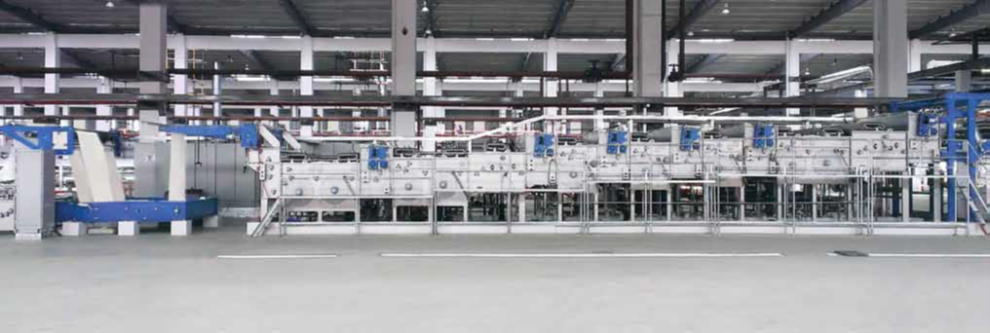
The Goller Sintensa range focuses on one core objective—consistent, controlled spun oil removal for knit fabrics.
Instead of complex processing, the emphasis is on process stability and uniformity:
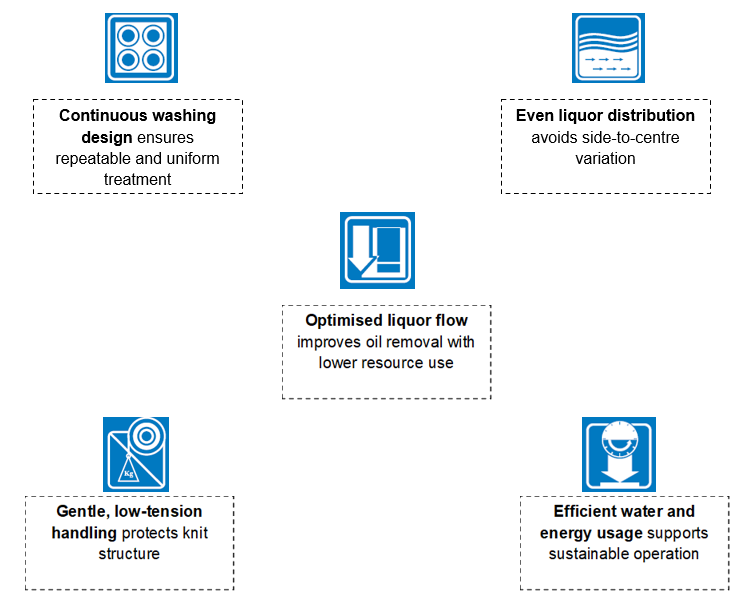
What makes modern systems relevant is not just their ability to wash, but their ability to do so with precision, control, and minimal intervention.
Sometimes, quality doesn’t depend on adding more—but on removing what shouldn’t remain.